

If you want my team to just do your marketing for you, click here.



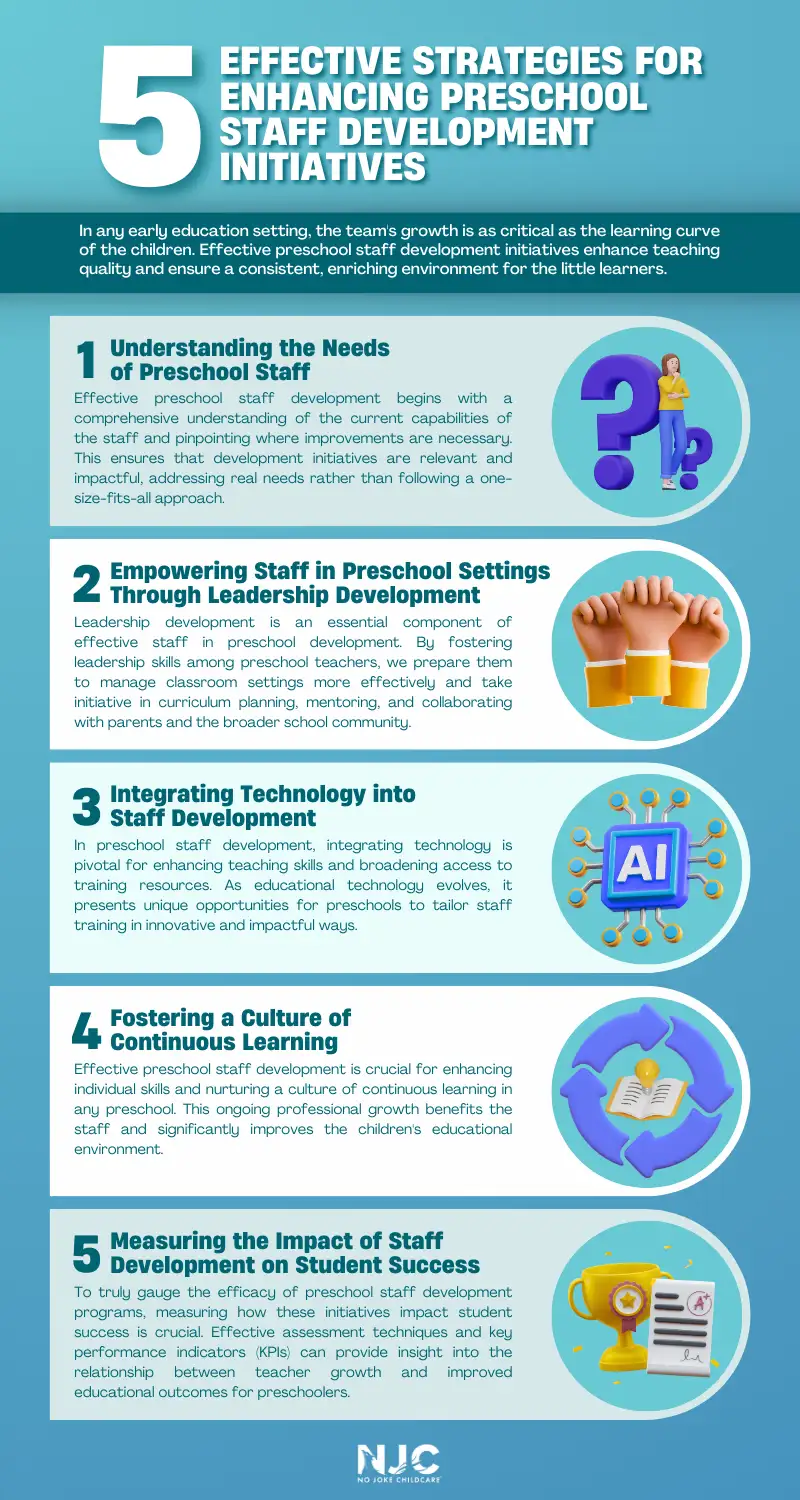
In any early education setting, the team’s growth is as critical as the learning curve of the children. Effective preschool staff development initiatives enhance teaching quality and ensure a consistent, enriching environment for the little learners. Understanding this, we’ve outlined five practical strategies to bolster preschool staff development initiatives.
These strategies are designed to empower educators and foster continuous improvement and innovation. These initiatives, from targeted training programs to collaborative learning approaches, help set the stage for a thriving educational atmosphere. Stay tuned as we discover each strategy, ensuring the team’s growth translates directly into better outcomes for the children.
1. Understanding the Needs of Preschool Staff

Effective preschool staff development begins with a comprehensive understanding of the current capabilities of the staff and pinpointing where improvements are necessary. This ensures that development initiatives are relevant and impactful, addressing real needs rather than following a one-size-fits-all approach.
Assessing Current Skills and Identifying Gaps
The first step in any successful preschool staff development program is to assess the existing skills of each educator. This can be done through various methods, such as direct observations, self-assessments, and peer reviews. For instance, observing a teacher during class can provide insight into classroom management skills and instructional methods.
Similarly, self-assessment surveys can help educators reflect on their skills and identify areas for improvement. Once the data is collected, it’s crucial to identify common areas where staff members struggle, such as implementing new educational technology or adapting to new curricular changes.
The Role of Feedback in Professional Growth
Feedback is a cornerstone of professional growth and is particularly impactful in preschool settings. Constructive feedback helps educators understand what they are doing well and where to improve. This feedback should be timely, specific, and, most importantly, actionable.
For example, a supervisor might meet with the teacher after a classroom observation to discuss ways to enhance student engagement based on specific instances noted during the session. Creating a supportive environment where the staff feels comfortable seeking and giving feedback can foster a continuous learning culture within the center.
Tailoring Development Programs to Individual Needs
Once the needs are identified, the next phase in preschool staff development is tailoring training and development programs to meet these needs. This customization can involve:
By addressing the specific developmental needs of preschool staff staff through targeted programs, preschools can ensure that their educators are well-equipped to handle the challenges of their roles and continuously advance in their careers, leading to a more effective and motivated team.
Empowering Staff in Preschool Settings Through Leadership Development

Leadership development is an essential component of effective staff in preschool development. By fostering leadership skills among preschool teachers, we prepare them to manage classroom settings more effectively and take initiative in curriculum planning, mentoring, and collaborating with parents and the broader school community.
Importance of Leadership Skills in Early Childhood Education
Leadership skills in early childhood education translate into better classroom management, improved student outcomes, and more dynamic interactions within the school community. Leaders in preschool settings are equipped to inspire their peers, advocate for the needs of their students, and innovate teaching practices.
This leadership also helps build a resilient learning environment where the staff feels valued and empowered to make decisions. Teachers with strong leadership skills can effectively communicate with parents, providing clear insights into students’ progress and needs, reinforcing the home-school connection crucial in early education.
Programs and Workshops to Cultivate Leadership Among Preschool Teachers
To cultivate these essential leadership qualities, preschools can implement specific programs and workshops focused on leadership skills:
These programs should provide theoretical knowledge and practical experiences that allow teachers to practice leadership in safe, supportive environments.
Integrating Technology into Staff Development

In preschool staff development, integrating technology is pivotal for enhancing teaching skills and broadening access to training resources. As educational technology evolves, it presents unique opportunities for preschools to tailor staff training in innovative and impactful ways.
Tools and Software That Enhance Teaching Skills
Several technological tools and software platforms are specifically designed to boost the teaching skills of preschool educators:
Incorporating these technologies into staff development programs allows for a more interactive learning experience, which can significantly improve teaching efficacy.
Virtual Training Sessions and Their Impact on Accessibility
Virtual training sessions have revolutionized access to preschool staff development opportunities, especially for those in remote or underserved areas. These sessions enable:
Evaluating the Effectiveness of Technology-Based Learning in Preschool Environments
To ensure that integrating technology into preschool staff development is truly beneficial, it is crucial to evaluate its effectiveness regularly. You can achieve this through:
By thoroughly evaluating these aspects, preschools can fine-tune their technology integration strategies to maximize the benefits of preschool staff development programs. This ensures that educators are well-trained and adept at using advanced tools to foster a stimulating learning environment.
Fostering a Culture of Continuous Learning

Effective preschool staff development is crucial for enhancing individual skills and nurturing a culture of continuous learning in any preschool. This ongoing professional growth benefits the staff and significantly improves the children’s educational environment.
Creating Incentives for Ongoing Professional Education
Motivating educators to engage in continuous learning is essential. Here are some ways preschools can create incentives:
These incentives encourage educators to continually enhance their skills and help retain top talent within the preschool.
The Role of Peer Mentoring and Collaborative Learning
Peer mentoring and collaborative learning are pivotal in reinforcing a culture of continuous learning. By sharing knowledge and experiences, staff can learn from one another practically and impactfully. Key components include:
These strategies improve individual teacher skills and build a stronger, more cohesive team.
How Continuous Learning Influences Classroom Dynamics and Student Engagement
The benefits of a continuous learning culture extend into the classroom, significantly influencing dynamics and engagement:
The positive changes driven by continuous learning make the classroom a more stimulating place for children and foster an environment where education thrives on innovation and tradition. Through targeted preschool staff development efforts, educators become more equipped to nurture young minds in ever-evolving ways.
Measuring the Impact of Staff Development on Student Success

To truly gauge the efficacy of preschool staff development programs, measuring how these initiatives impact student success is crucial. Effective assessment techniques and key performance indicators (KPIs) can provide insight into the relationship between teacher growth and improved educational outcomes for preschoolers.
Key Performance Indicators for Staff Development
Establishing clear KPIs is essential for evaluating the success of staff development programs. These indicators can include:
These KPIs help quantify the progress and impact of development efforts, providing a clear benchmark for ongoing improvement.
Linking Staff Growth to Improvements in Student Learning Outcomes
To connect preschool staff development with student learning outcomes, it’s important to monitor specific educational metrics:
By analyzing these outcomes, preschools can directly correlate staff development with positive changes in the educational environment and student performance.
Strategies for Ongoing Assessment and Adaptation of Staff Development Programs
Continuously assessing and refining staff development programs is crucial for sustained success. Some strategies include:
Implementing these strategies ensures that preschool staff development is a dynamic, responsive process that adapts to the needs of educators and students alike. A well-measured and adaptive staff development program boosts teacher efficacy. It significantly enhances students’ learning experience, creating a nurturing and successful educational environment.
Conclusion
Effective preschool staff development is a cornerstone of educational excellence. By understanding the needs of the educators, integrating innovative technologies, fostering a culture of continuous learning, and measuring the impacts of these initiatives, we ensure that the staff is well-prepared and continually evolving to meet and exceed the educational standards our children deserve.
Interested in elevating your childcare center’s educational and marketing strategies? Connect with No Joke Childcare today. Schedule a strategy call or call us at (706) 303-3012 for innovative solutions that advance your services and maximize your impact. Let’s innovate and inspire together!
In any early education setting, the team’s growth is as critical as the learning curve of the children. Effective preschool staff development initiatives enhance teaching quality and ensure a consistent, enriching environment for the little learners. Understanding this, we’ve outlined five practical strategies to bolster preschool staff development initiatives.
These strategies are designed to empower educators and foster continuous improvement and innovation. These initiatives, from targeted training programs to collaborative learning approaches, help set the stage for a thriving educational atmosphere. Stay tuned as we discover each strategy, ensuring the team’s growth translates directly into better outcomes for the children.
1. Understanding the Needs of Preschool Staff
Effective preschool staff development begins with a comprehensive understanding of the current capabilities of the staff and pinpointing where improvements are necessary. This ensures that development initiatives are relevant and impactful, addressing real needs rather than following a one-size-fits-all approach.
Assessing Current Skills and Identifying Gaps
The first step in any successful preschool staff development program is to assess the existing skills of each educator. This can be done through various methods, such as direct observations, self-assessments, and peer reviews. For instance, observing a teacher during class can provide insight into classroom management skills and instructional methods.
Similarly, self-assessment surveys can help educators reflect on their skills and identify areas for improvement. Once the data is collected, it’s crucial to identify common areas where staff members struggle, such as implementing new educational technology or adapting to new curricular changes.
The Role of Feedback in Professional Growth
Feedback is a cornerstone of professional growth and is particularly impactful in preschool settings. Constructive feedback helps educators understand what they are doing well and where to improve. This feedback should be timely, specific, and, most importantly, actionable.
For example, a supervisor might meet with the teacher after a classroom observation to discuss ways to enhance student engagement based on specific instances noted during the session. Creating a supportive environment where the staff feels comfortable seeking and giving feedback can foster a continuous learning culture within the center.
Tailoring Development Programs to Individual Needs
Once the needs are identified, the next phase in preschool staff development is tailoring training and development programs to meet these needs. This customization can involve:
By addressing the specific developmental needs of preschool staff staff through targeted programs, preschools can ensure that their educators are well-equipped to handle the challenges of their roles and continuously advance in their careers, leading to a more effective and motivated team.
Empowering Staff in Preschool Settings Through Leadership Development
Leadership development is an essential component of effective staff in preschool development. By fostering leadership skills among preschool teachers, we prepare them to manage classroom settings more effectively and take initiative in curriculum planning, mentoring, and collaborating with parents and the broader school community.
Importance of Leadership Skills in Early Childhood Education
Leadership skills in early childhood education translate into better classroom management, improved student outcomes, and more dynamic interactions within the school community. Leaders in preschool settings are equipped to inspire their peers, advocate for the needs of their students, and innovate teaching practices.
This leadership also helps build a resilient learning environment where the staff feels valued and empowered to make decisions. Teachers with strong leadership skills can effectively communicate with parents, providing clear insights into students’ progress and needs, reinforcing the home-school connection crucial in early education.
Programs and Workshops to Cultivate Leadership Among Preschool Teachers
To cultivate these essential leadership qualities, preschools can implement specific programs and workshops focused on leadership skills:
These programs should provide theoretical knowledge and practical experiences that allow teachers to practice leadership in safe, supportive environments.
Integrating Technology into Staff Development
In preschool staff development, integrating technology is pivotal for enhancing teaching skills and broadening access to training resources. As educational technology evolves, it presents unique opportunities for preschools to tailor staff training in innovative and impactful ways.
Tools and Software That Enhance Teaching Skills
Several technological tools and software platforms are specifically designed to boost the teaching skills of preschool educators:
Incorporating these technologies into staff development programs allows for a more interactive learning experience, which can significantly improve teaching efficacy.
Virtual Training Sessions and Their Impact on Accessibility
Virtual training sessions have revolutionized access to preschool staff development opportunities, especially for those in remote or underserved areas. These sessions enable:
Evaluating the Effectiveness of Technology-Based Learning in Preschool Environments
To ensure that integrating technology into preschool staff development is truly beneficial, it is crucial to evaluate its effectiveness regularly. You can achieve this through:
By thoroughly evaluating these aspects, preschools can fine-tune their technology integration strategies to maximize the benefits of preschool staff development programs. This ensures that educators are well-trained and adept at using advanced tools to foster a stimulating learning environment.
Fostering a Culture of Continuous Learning
Effective preschool staff development is crucial for enhancing individual skills and nurturing a culture of continuous learning in any preschool. This ongoing professional growth benefits the staff and significantly improves the children’s educational environment.
Creating Incentives for Ongoing Professional Education
Motivating educators to engage in continuous learning is essential. Here are some ways preschools can create incentives:
These incentives encourage educators to continually enhance their skills and help retain top talent within the preschool.
The Role of Peer Mentoring and Collaborative Learning
Peer mentoring and collaborative learning are pivotal in reinforcing a culture of continuous learning. By sharing knowledge and experiences, staff can learn from one another practically and impactfully. Key components include:
These strategies improve individual teacher skills and build a stronger, more cohesive team.
How Continuous Learning Influences Classroom Dynamics and Student Engagement
The benefits of a continuous learning culture extend into the classroom, significantly influencing dynamics and engagement:
The positive changes driven by continuous learning make the classroom a more stimulating place for children and foster an environment where education thrives on innovation and tradition. Through targeted preschool staff development efforts, educators become more equipped to nurture young minds in ever-evolving ways.
Measuring the Impact of Staff Development on Student Success
To truly gauge the efficacy of preschool staff development programs, measuring how these initiatives impact student success is crucial. Effective assessment techniques and key performance indicators (KPIs) can provide insight into the relationship between teacher growth and improved educational outcomes for preschoolers.
Key Performance Indicators for Staff Development
Establishing clear KPIs is essential for evaluating the success of staff development programs. These indicators can include:
These KPIs help quantify the progress and impact of development efforts, providing a clear benchmark for ongoing improvement.
Linking Staff Growth to Improvements in Student Learning Outcomes
To connect preschool staff development with student learning outcomes, it’s important to monitor specific educational metrics:
By analyzing these outcomes, preschools can directly correlate staff development with positive changes in the educational environment and student performance.
Strategies for Ongoing Assessment and Adaptation of Staff Development Programs
Continuously assessing and refining staff development programs is crucial for sustained success. Some strategies include:
Implementing these strategies ensures that preschool staff development is a dynamic, responsive process that adapts to the needs of educators and students alike. A well-measured and adaptive staff development program boosts teacher efficacy. It significantly enhances students’ learning experience, creating a nurturing and successful educational environment.
Conclusion
Effective preschool staff development is a cornerstone of educational excellence. By understanding the needs of the educators, integrating innovative technologies, fostering a culture of continuous learning, and measuring the impacts of these initiatives, we ensure that the staff is well-prepared and continually evolving to meet and exceed the educational standards our children deserve.
Interested in elevating your childcare center’s educational and marketing strategies? Connect with No Joke Childcare today. Schedule a strategy call or call us at (706) 303-3012 for innovative solutions that advance your services and maximize your impact. Let’s innovate and inspire together!


